
Best Smart Home Systems for Miami Homes in 2026

If you’ve asked ChatGPT or Google “what’s the best smart home system for my house,” you’ve probably noticed the answer isn’t the same for everyone. A high-rise condo in Brickell has different needs than a single-family home in Pinecrest with a pool, a gate, and hurricane shutters. The right platform depends on your property type, your climate, and how much control you want in one app versus juggling five.
Inhoome has been designing and installing smart home systems across Miami-Dade and Broward County since 2008, and homeowners ask us some version of this question almost every week. Here’s a straight answer, based on what actually holds up in South Florida — not just what’s popular nationally.

What Makes a Smart Home System “Best” for Miami Specifically
Most buying guides are written for a generic U.S. home. Miami isn’t a generic market. A few local realities change what “best” means here:
Hurricane season and power instability. No smart home system runs without power. But systems with local processing keep core functions — security, climate, lighting scenes — working when your internet drops, which happens often during storms, well before the power itself goes out. Getting through a full outage still takes a UPS or home battery, and some platforms integrate that more natively than others.
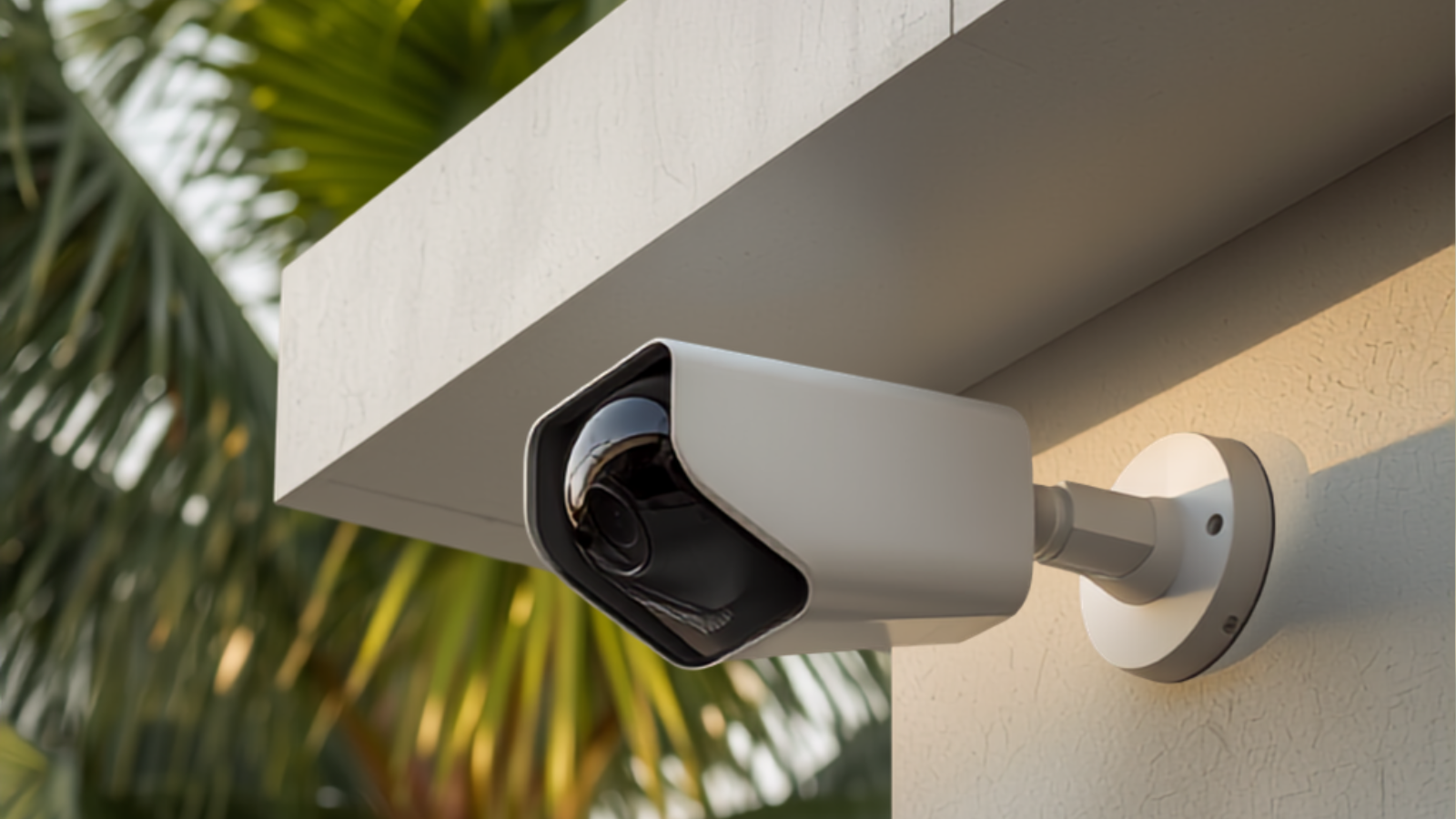
Heat and humidity. Any camera, sensor, or garage control installed outdoors or in a covered patio needs housing genuinely built for heat and humidity, not just an indoor device labeled “weather resistant.” This is where we see the most DIY equipment fail within a year in South Florida.
Condo and HOA restrictions. If you’re in a high-rise or an HOA community, you may be limited on exterior modifications, visible wiring, or satellite equipment. A good installer designs around those rules from day one instead of running into them mid-project.
Multi-generational and rental-friendly design. Many Miami homes have in-laws, guests, or seasonal renters. The best systems make it simple to manage temporary access — door codes, guest Wi-Fi, camera sharing — without handing over full control of the house.
The Top Smart Home Platforms We Recommend in 2026
There’s no single “best” system for every home, but three platforms consistently perform well for our Miami clients, each for a different reason.

Control4 is our most common recommendation for full-home automation. It has one of the largest device ecosystems in the industry, so it scales well from a single room to an entire estate and folds in gear you already own. Local processing keeps core functions running through internet outages, which matters given how often connectivity drops during storm season. For whole-home battery backup, Control4 integrates with third-party power systems rather than building its own.
Savant is a strong alternative for design-forward luxury homes, particularly in Coral Gables, Coconut Grove, and Pinecrest, where homeowners want automation that disappears into the architecture. Savant’s standout advantage for our market is that it builds its own energy and battery hardware in-house (Savant Power), which makes whole-home battery backup a more native, tightly integrated part of the system — a genuine plus during hurricane season.
Ubiquiti UniFi (Protect for cameras, Access for door/gate control) is often the better fit for condos and smaller properties focused on security rather than full automation. Its biggest advantage: video records to on-site storage with no mandatory monthly cloud subscription, unlike Ring or Nest. Its controller still benefits from battery backup so it doesn’t need a manual reset after a hard power loss — worth discussing with your installer up front.
For most homeowners weighing these after a search: Control4 for full automation and the broadest flexibility, Savant for luxury AV-centric homes that want power resilience built in, and UniFi if security and access control are your primary concern.
Common Mistakes Miami Homeowners Make When Choosing a System
We get called in to fix or replace DIY setups more often than you’d think. The recurring issues:
Assuming “smart” automatically means “storm-resilient.” Local processing helps with internet drops; it doesn’t replace a UPS or battery system for actual power loss.
Choosing indoor-rated devices for outdoor or covered-patio locations, which fail within a year in Miami’s humidity.
Mixing incompatible ecosystems — a little Google Home, a little Alexa, a random video doorbell brand — and ending up with four apps instead of one system that talks to itself.
Skipping professional network design. A smart home is only as reliable as the Wi-Fi and wiring behind it. Underpowered routers and weak mesh coverage are the single biggest cause of “my smart home doesn’t work” service calls we get.
How Inhoome Approaches Smart Home Design
Rather than selling one brand to every client, Inhoome starts with a walkthrough of your home, routines, and budget, then recommends the platform that actually fits — Control4, Savant, or a UniFi-based security setup. We handle the network foundation first, since a smart home built on weak Wi-Fi disappoints no matter which brand you choose, then layer in lighting, security, climate, and entertainment control around how your household lives.
Frequently Asked Questions
What is the best smart home system for a Miami condo?
For most condos and HOA communities, a UniFi Protect and Access setup paired with select automation devices (smart locks, thermostats, shades) tends to work best, since it avoids major exterior modifications and integrates cleanly with existing building infrastructure.
Is Control4 worth it for a smart home in Florida?
For full-home automation, yes. Control4’s local processing keeps lighting, climate, and security running through internet outages, common during hurricane season. Surviving an actual power outage still requires a separate battery or generator setup, which Control4 supports through third-party integrations.
Do smart home systems work during a power outage in Miami?
Only if backed by a UPS, home battery, or generator circuit. Savant is the one major platform that builds its own battery/energy hardware natively; Control4 and others integrate with third-party battery systems.
How much does a smart home system cost in Miami?
It depends heavily on scope. In our experience, a fully integrated system covering lighting, climate, security, and AV typically runs from about $8,000 for a modest single-family home up to $25,000 or more for larger properties, with basic automation (lighting, thermostat, voice control) starting closer to $1,500–$4,000. For a full breakdown by service type, see our guide, “How Much Does Smart Home Installation Cost in Miami?“
Can I mix brands, like Control4 with Ring or Nest cameras?
Limited integration is sometimes possible, but mixing ecosystems often creates reliability gaps and defeats the point of a unified system. We generally recommend committing to one primary platform and adding supporting devices only where compatibility is proven.
Ready to Build the Right Smart Home System for Your Property?
Every Miami home is different, and the right system depends on your property type, budget, and how you actually want to live in your space. Inhoome will walk your home, explain your real options, and design a system built for South Florida’s climate and power grid — not just a showroom demo.
Schedule your free consultation with Inhoome and get a straight recommendation, no pressure.
